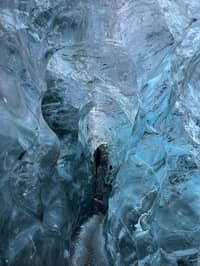
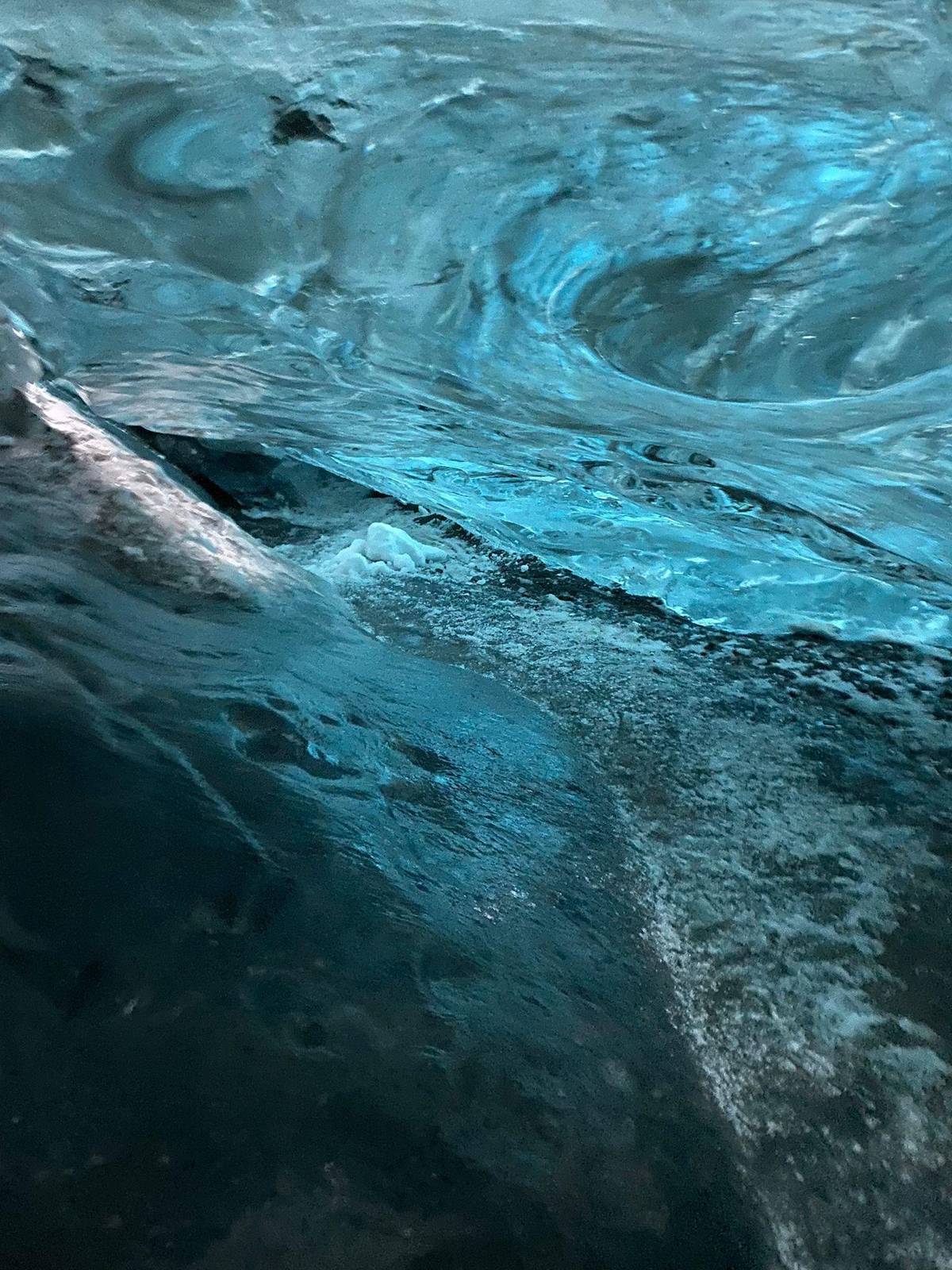
 Fresh caves
Early winter
October to December
- Wettest month
- October
- Daylight mid-December
- 4.3 hours
- Season status
- Opening
Guides
Language
EnglishCurrency
US dollar · $On GetYourGuide you see prices in this currency.
Guide · Season
Natural ice caves form in the melt of summer and open once frost returns. Here is when the season runs at the lagoon, what each winter month feels like, and what is left if you come in summer.
Editorial team, blue-ice-cave-iceland.comUpdated October 25, 20266 minutes to read25 sources
Season at a glance
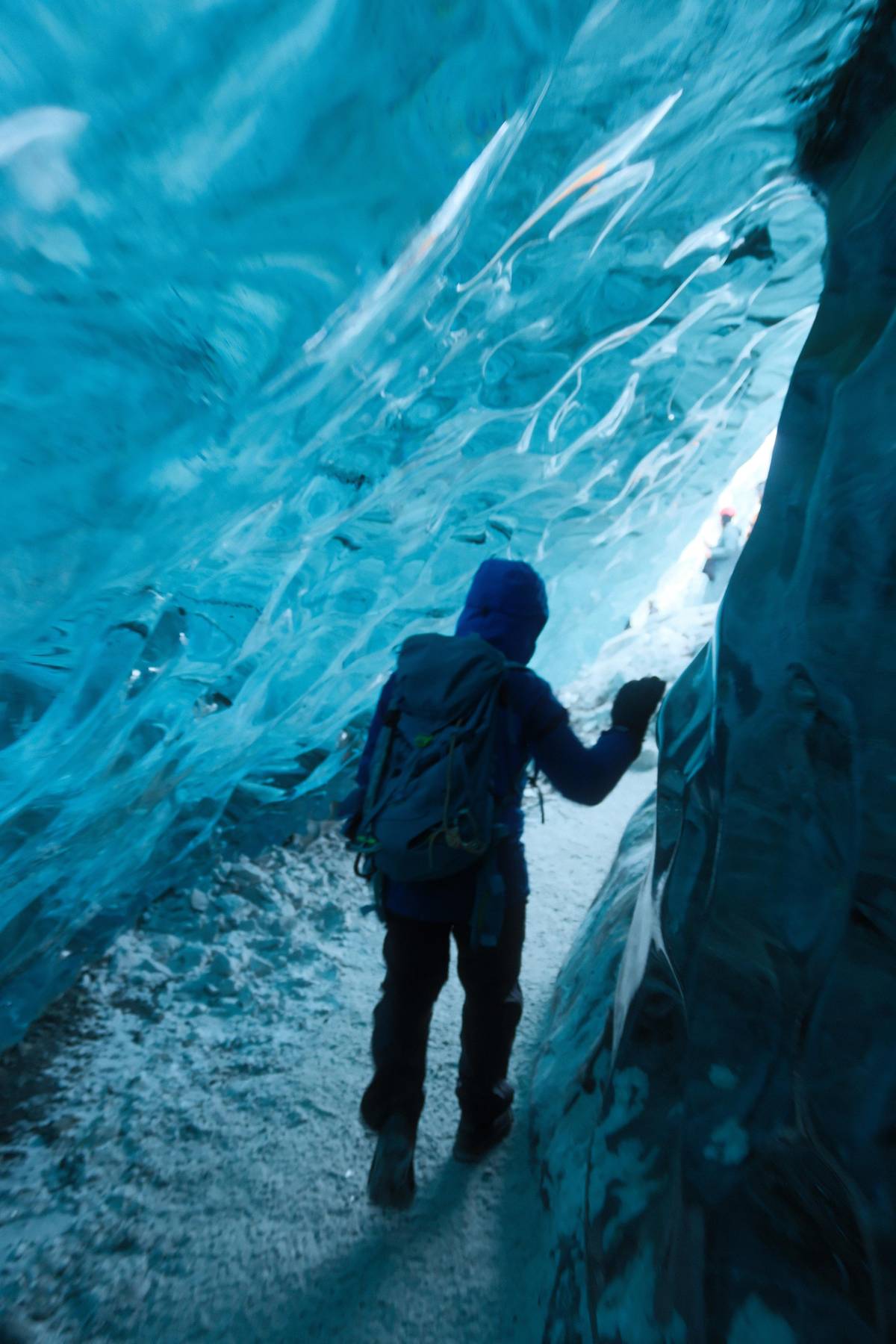
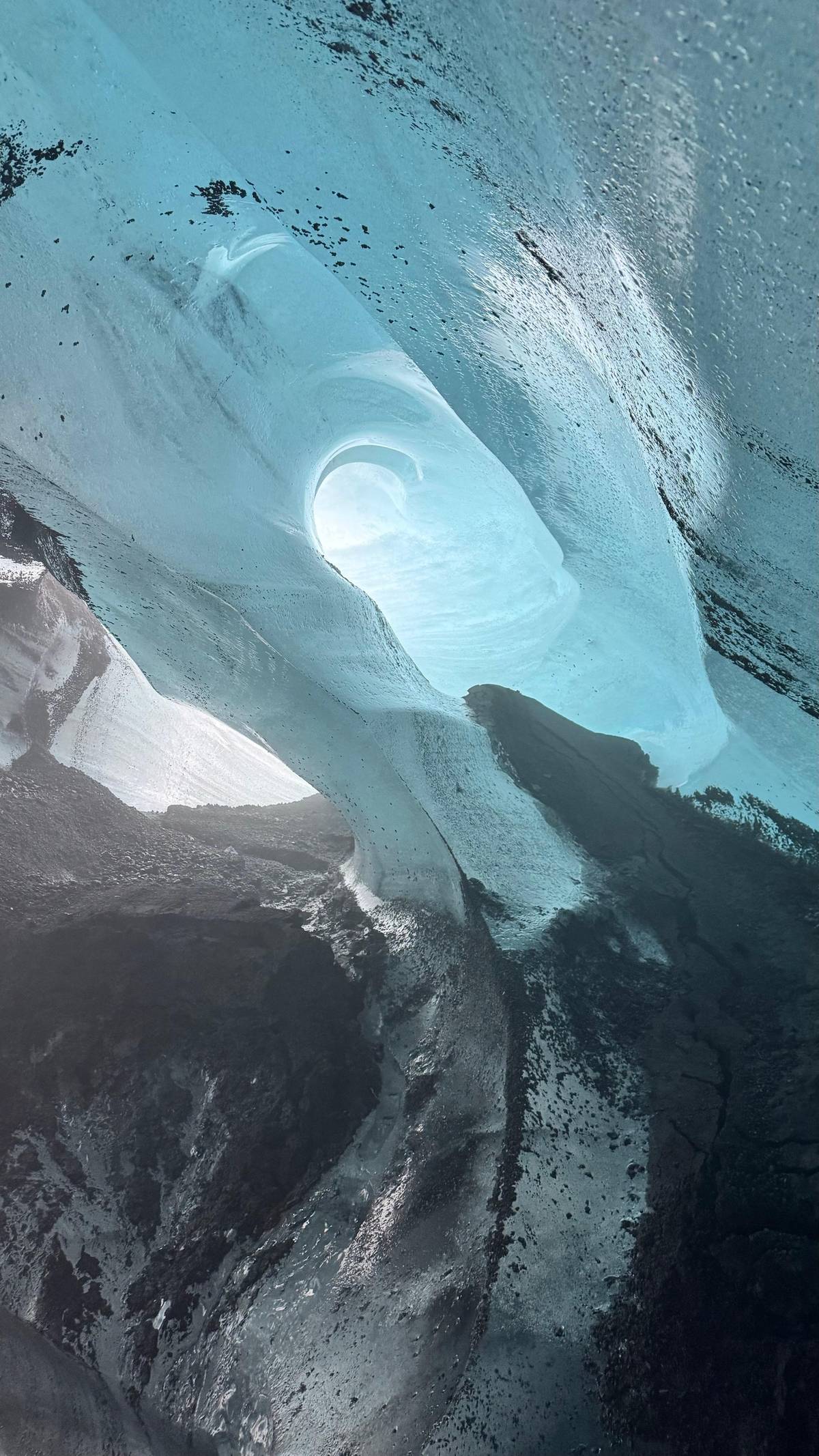
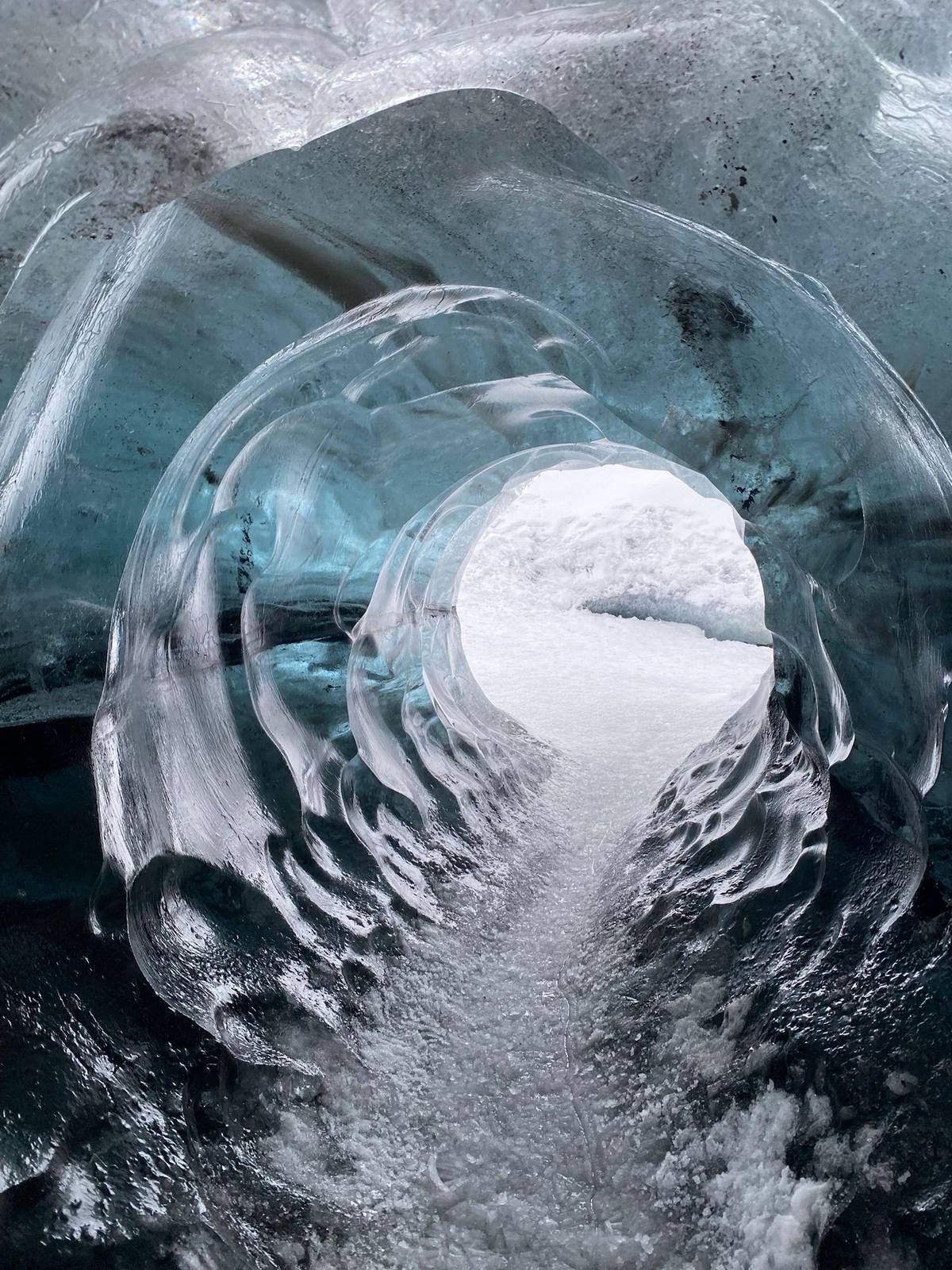
Iceland ice caves in winter are not a marketing season but a physical one. Visit Iceland explains that in spring and summer meltwater usually forms the caves as outflow tunnels, and that in the fall, once temperatures have dropped below freezing again, they are ready for exploration until the next spring.3 The same water that carves a cave makes it dangerous while it is still running.
NSIDC, the US snow and ice data center, describes glacier caves as carved out by water running through or under the ice.7 The US National Park Service warns, for its own glaciers, that ice caves and meltwater channels are prone to spontaneous collapse because of melting, and that meltwater volumes inside increase throughout the day in the warm season.89
That is why the lagoon operators switch products with the seasons. Ice Explorers runs its natural ice cave tour from October to April and offers a glacier walk from May to September instead.110 The cave tour this site sells belongs to that winter window; outside it, you walk on the same glacier rather than into it.
The ice cave year
Spring and summer
Outflow tunnels form under and through the ice.3
May to September
Ice Explorers runs walks on the ice instead of cave tours.10
October
The first month of Ice Explorers' cave season.1
November
Visit Iceland's usual start of the ice cave season.2
December
About 4.3 hours of sun at mid-month.4
April to May
There is no fixed opening day. Visit Iceland says the ice cave season varies with temperatures and weather conditions but typically extends from November through May.2 Ice Explorers lists October to April for both its short cave tour and its longer exploration tour, which shows how operators read the same ice slightly differently.111
Each new season brings new caves. Ice Explorers says that from season to season, and even within a season, the caves change, with old ones disappearing and new ones forming.12 Guides look for the caves that are safe and accessible each year, so the first weeks of a season can look quite different from the last.
The practical rule is simple: the months inside both definitions, November to April, are the most dependable on paper, while October and May depend more on the year.21 Book early-season or late-season dates with free cancellation, and read the operator's own updates rather than old photos.
Month by month
Station averages
| Month | Daylight (h) | Darkness (h) | High / low | Wet days | Ice Explorers runs |
|---|---|---|---|---|---|
| Jan | 5.4 | 18.6 | 4 / -2 °C | - | Ice cave tours |
| Feb | 8.5 | 15.5 | 4 / -2 °C | - | Ice cave tours |
| Mar | 11.6 | 12.4 | 4 / -1 °C | - | Ice cave tours |
| Apr | 15 | 9 | 7 / 1 °C | - | Ice cave tours |
| May | 18.2 | 5.8 | 10 / 4 °C | - | Glacier walks |
| Jun | 20.9 | 3.1 | 12 / 7 °C | - | Glacier walks |
| Jul | 19.8 | 4.2 | 14 / 8 °C | - | Glacier walks |
| Aug | 16.5 | 7.5 | 14 / 8 °C | - | Glacier walks |
| Sep | 13.2 | 10.8 | 11 / 6 °C | - | Glacier walks |
| Oct | 10 | 14 | 8 / 3 °C | - | Ice cave tours |
| Nov | 6.6 | 17.4 | 5 / 0 °C | - | Ice cave tours |
| Dec | 4.3 | 19.7 | 4 / -1 °C | - | Ice cave tours |
Daylight is calculated for mid-month at the lagoon; highs and lows are monthly means of the Icelandic Meteorological Office station Fagurhólsmýri, about 30 km south-west of the lagoon, 1991 to 2008; the station published no count of wet days.4 Season according to Ice Explorers.1
Parts of the season
Fresh cavesOctober to December
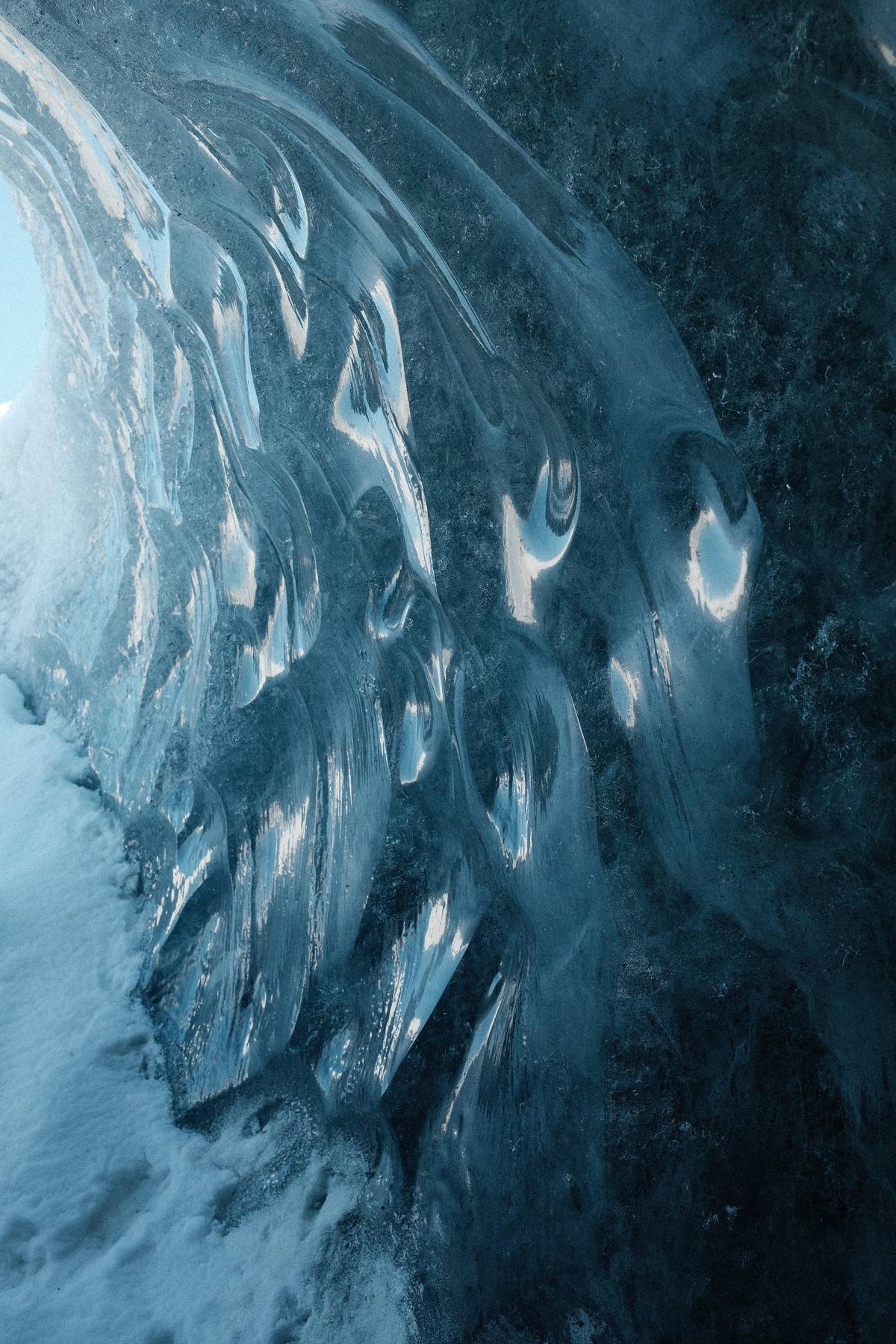 Steady frost
January and February
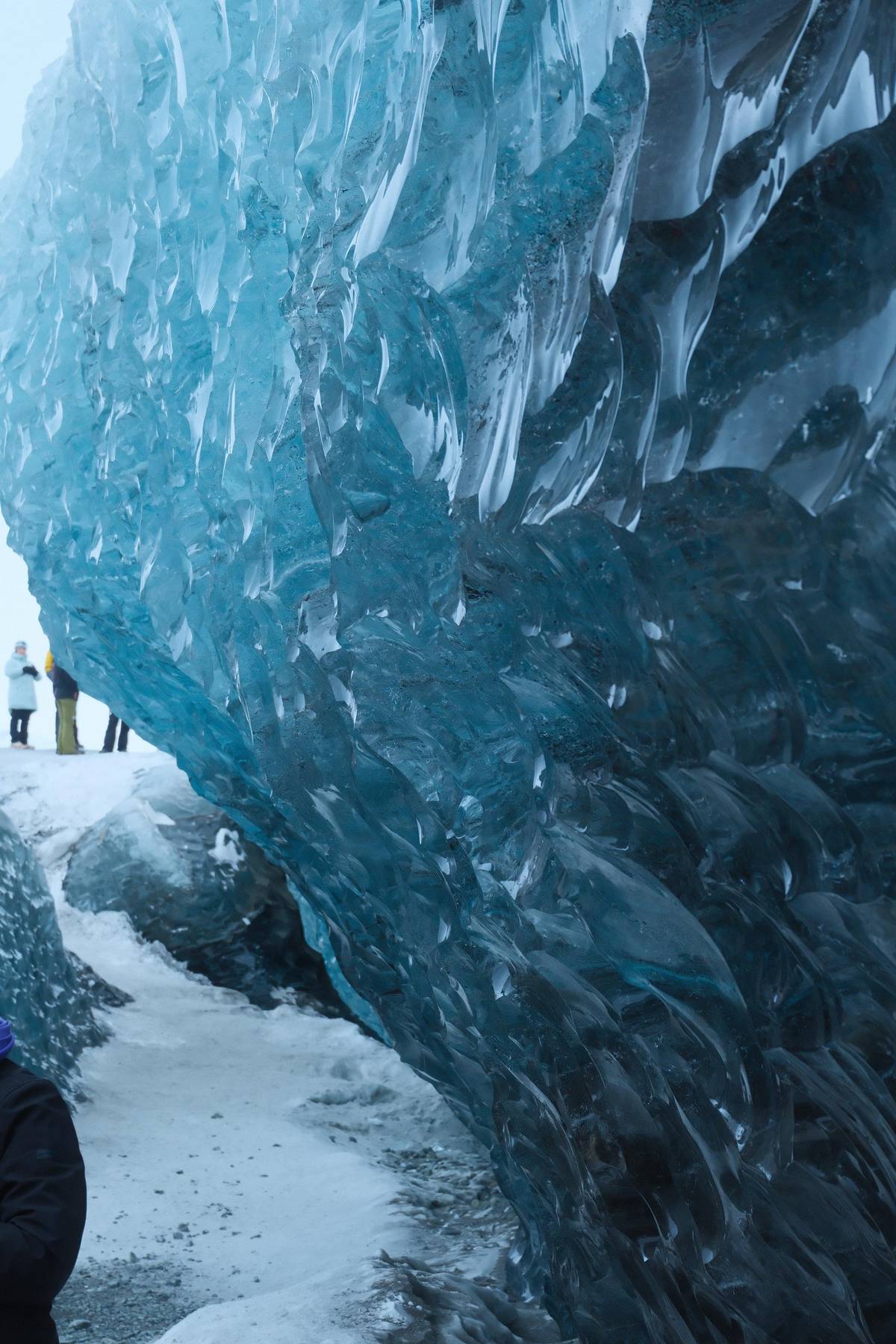 Longer days
March and April
In spring and summer, meltwater usually forms them as outflow tunnels. In the fall, when temperatures have gone below freezing again, they are ready for exploration until next spring.
Winter near the lagoon is wet and dark rather than bitterly cold. At the Met Office station Fagurhólsmýri, between Skaftafell and the lagoon, January averages a daily high of 3.9 °C and a low of -1.9 °C, with 171 mm of precipitation in the month.4 February is slightly colder at night, averaging -2.1 °C.4
Daylight is the bigger factor. At the lagoon's latitude the sun is up about 4.3 hours at mid-December, 5.4 hours at mid-January and 8.5 hours at mid-February, before March climbs to 11.6 hours.4 Short days mean morning tours start in low light and the drive back often happens in the dark.
Rain and snow are part of the deal in every month. October is the wettest month in the station record, with 197 mm, and September follows with 190 mm.4 Safetravel calls the weather the biggest concern when outdoors in Iceland, warning that cold, strong wind and rain together can be fatal without the right clothing and equipment.13
Checklist
Calculator
Choose a tour and enter how many people are going
Total from$390
per participant from $195
Check availabilityfree cancellationWe take the cheapest GetYourGuide price of the ice cave tour you choose, multiply it by your group and convert it with the ECB daily rate; checkout on GetYourGuide has the final figure.
Video
No video data loads before you press play.
Visiting an ice cave in December gives you the full winter mood and the shortest days of the year, with about 4.3 hours of sun at mid-month.4 Book early and allow for days when weather closes a road or a tour.
January and February sit in the middle of the season. The caves have had weeks of frost behind them, temperatures at the station hover around freezing at night, and daylight grows from 5.4 to 8.5 hours over those weeks.4 It is the middle ground between the darkest weeks and the late-season thaw.
March and April bring longer days, 11.6 and 15 hours at mid-month, and still fall inside Ice Explorers' October to April window.41 The longer light makes the drive easier and leaves time for the lagoon and the beach on the same day, but the end of the season depends on how quickly the thaw arrives.
If you travel between June and September, the lagoon caves are not an option, but an ice cave in Iceland in summer is still possible. Operators of the Katla cave near Vík say it is open every month of the year, and Visit South Iceland lists year-round ice cave explorations on Mýrdalsjökull.514 Access can still be limited by weather or glacier conditions.5
The man-made tunnel in Langjökull is the other summer answer. Its operator says the tunnel is maintained year-round and remains accessible at any time of the year.6 In summer the glacier vehicle ride is shorter, about 30 minutes each way against 75 minutes in winter, and a rough gravel road from Húsafell to the Klaki base camp opens only from 1 June to 15 October.1516
At the lagoon, summer means a glacier walk instead. Ice Explorers runs its Ice Exploration Tour from May to September, lasting 4 to 4.5 hours, with a minimum age of 10.10 You will not walk into a cave, but you will see the same blue ice from the outside, under far longer days.
The seasons sit on top of a longer trend. Vatnajökull National Park says the southern outlet glaciers of Vatnajökull reached their largest size of the last ten millennia only 130 years ago and are now retreating and thinning at unprecedented rates.17 It adds that Icelandic glaciers could lose half of their volume by 2100.18
The Icelandic Meteorological Office put numbers on it in 2018: Icelandic glaciers had lost approximately 250 cubic kilometers of ice since 1995, about 7% of their total volume, and their area had shrunk by more than 600 km2 since 2000.1920 Breiðamerkurjökull, where the lagoon caves form, retreats faster still where it calves into Jökulsárlón, by up to 200-300 m a year.21
For a visitor this has practical consequences. The caves of any given winter are unique and will not return in the same shape, and the places where guides find them move with the ice. Check recent information from your operator rather than relying on a photo from a past season, and expect the walk to the cave to vary from year to year.
Every ice cave tour depends on the day. Ice Explorers says its trips are weather and condition dependent and that it may change the itinerary or cancel before the tour starts with safety in mind.22 Some lagoon listings add that the national park authorities can stop a tour when they judge conditions unsafe.
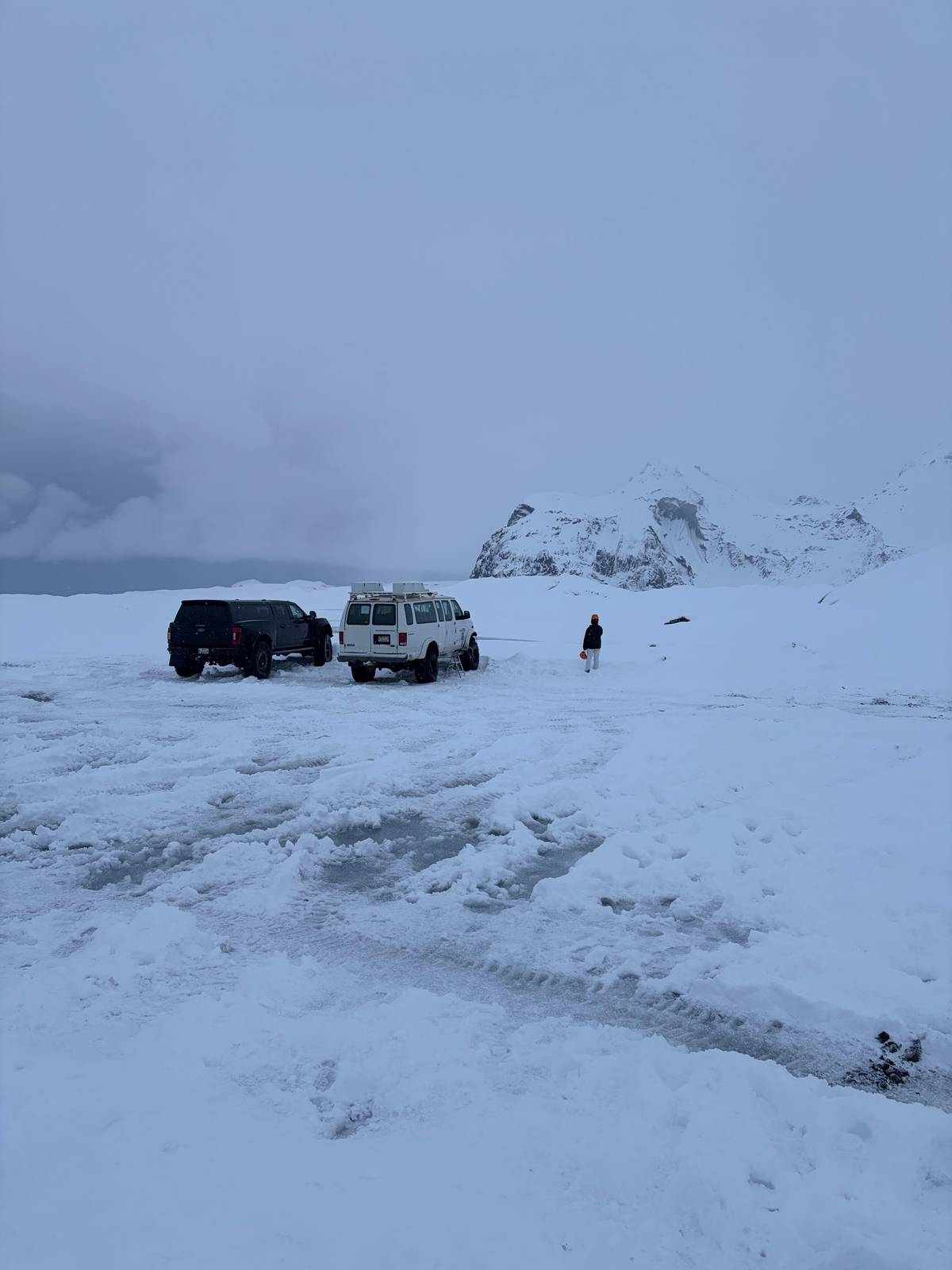
Vatnajökull National Park warns that weather can change suddenly and that roads can deteriorate from flooding, sandstorms and even snow at any time of year.23 For winter it recommends crampons and suitable tires, such as winter, all-year or studded tires.24 Safetravel adds: keep your plans flexible and be ready to change or cancel them.25
So build slack into a winter itinerary. Put the cave tour early in your stay near the lagoon, keep a spare day if you can, and choose a listing with free cancellation; the tour this site sells allows it up to 24 hours before. If a tour is cancelled by the operator for safety, check the listing's own refund terms, which vary between operators.
This winter's cave
Pick a date between October and April and see the ice as it is this season.
Roughly November to May. Visit Iceland gives November through May; Ice Explorers runs its lagoon cave tour from October to April.21
At Katla, yes. Katla operators say the cave is open every month, though weather can limit access.5
Meltwater. Visit Iceland says meltwater forms the caves in spring and summer, and they are ready once temperatures drop below freezing again.3
Around freezing. The nearby station averages a daily high of 3.9 °C and a low of -1.9 °C in January.4
About 4.3 hours. That is the time the sun is above the horizon at mid-December at the lagoon's latitude.4
No. Ice Explorers says old caves disappear and new ones form from season to season.12
The tour may change or be cancelled. Ice Explorers reserves the right to change or cancel trips for safety before they start.22
Sources