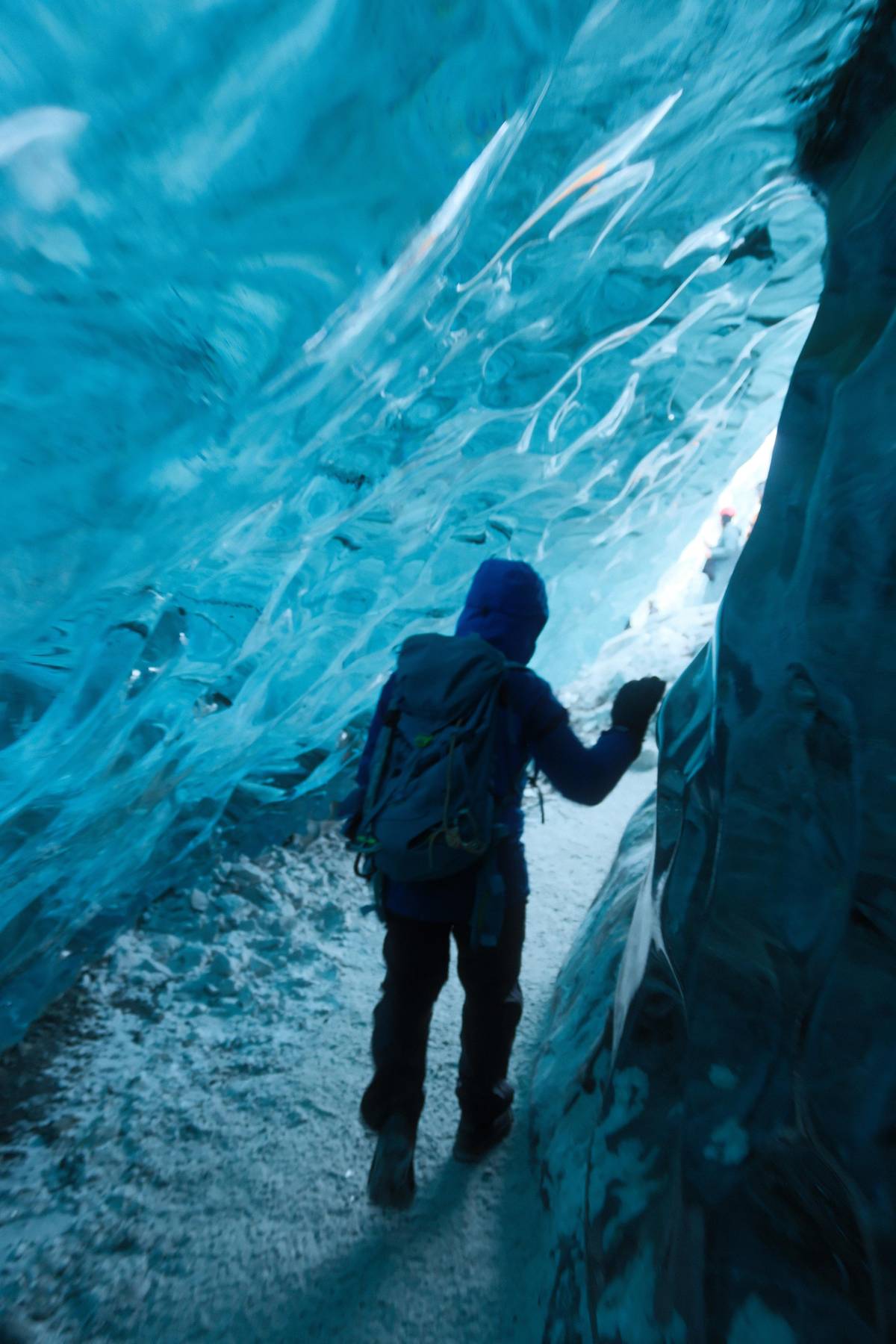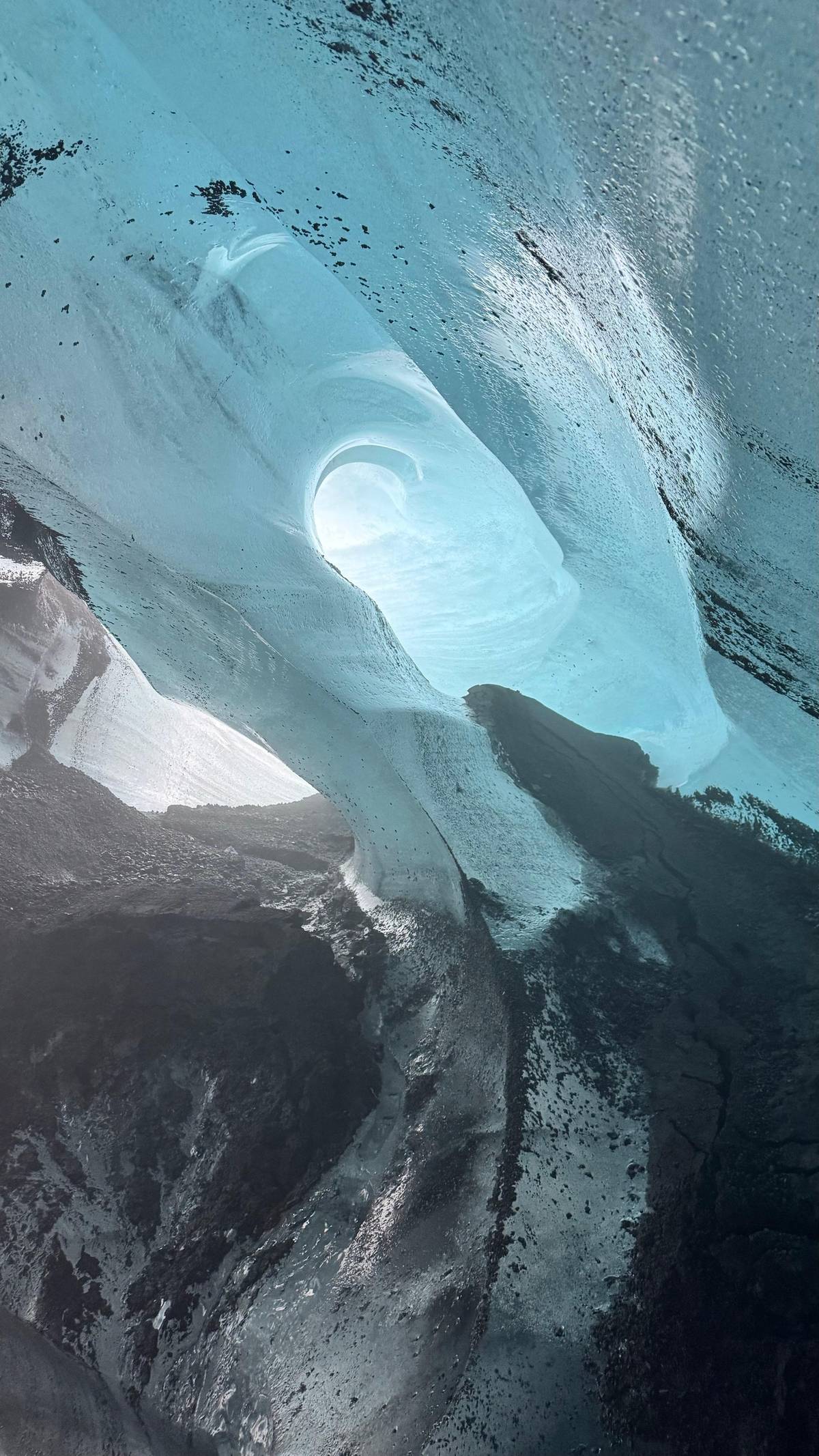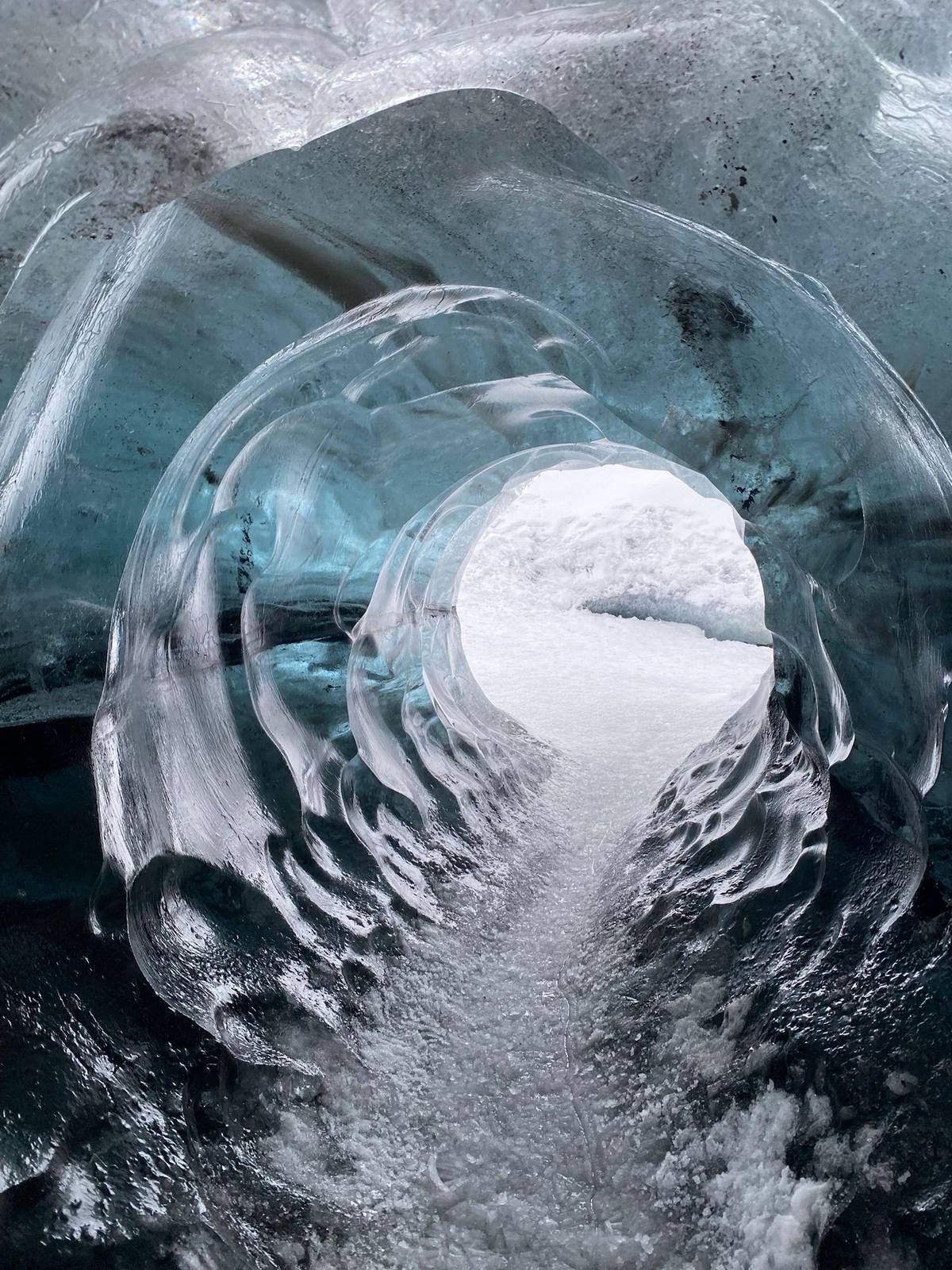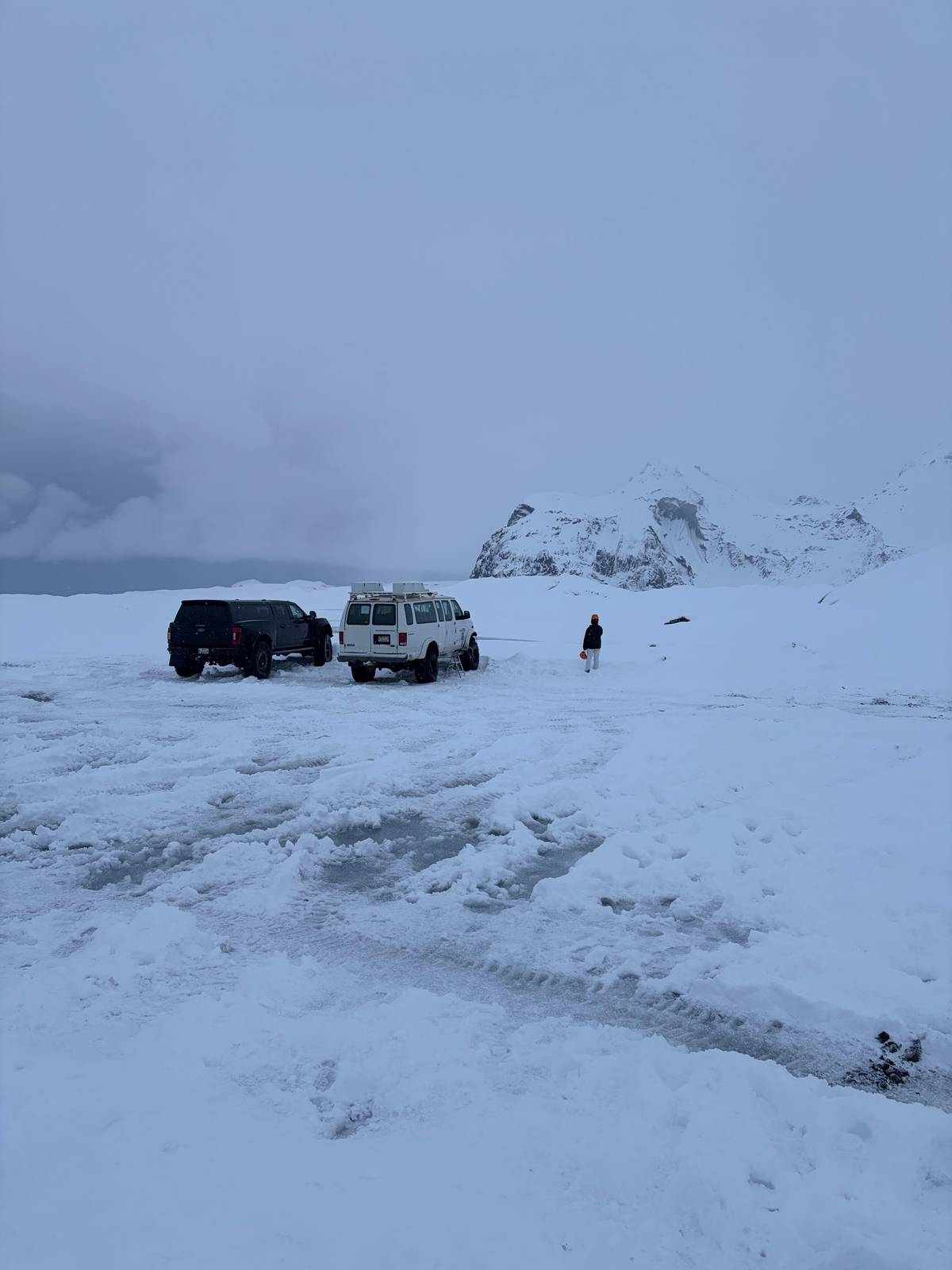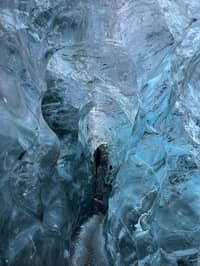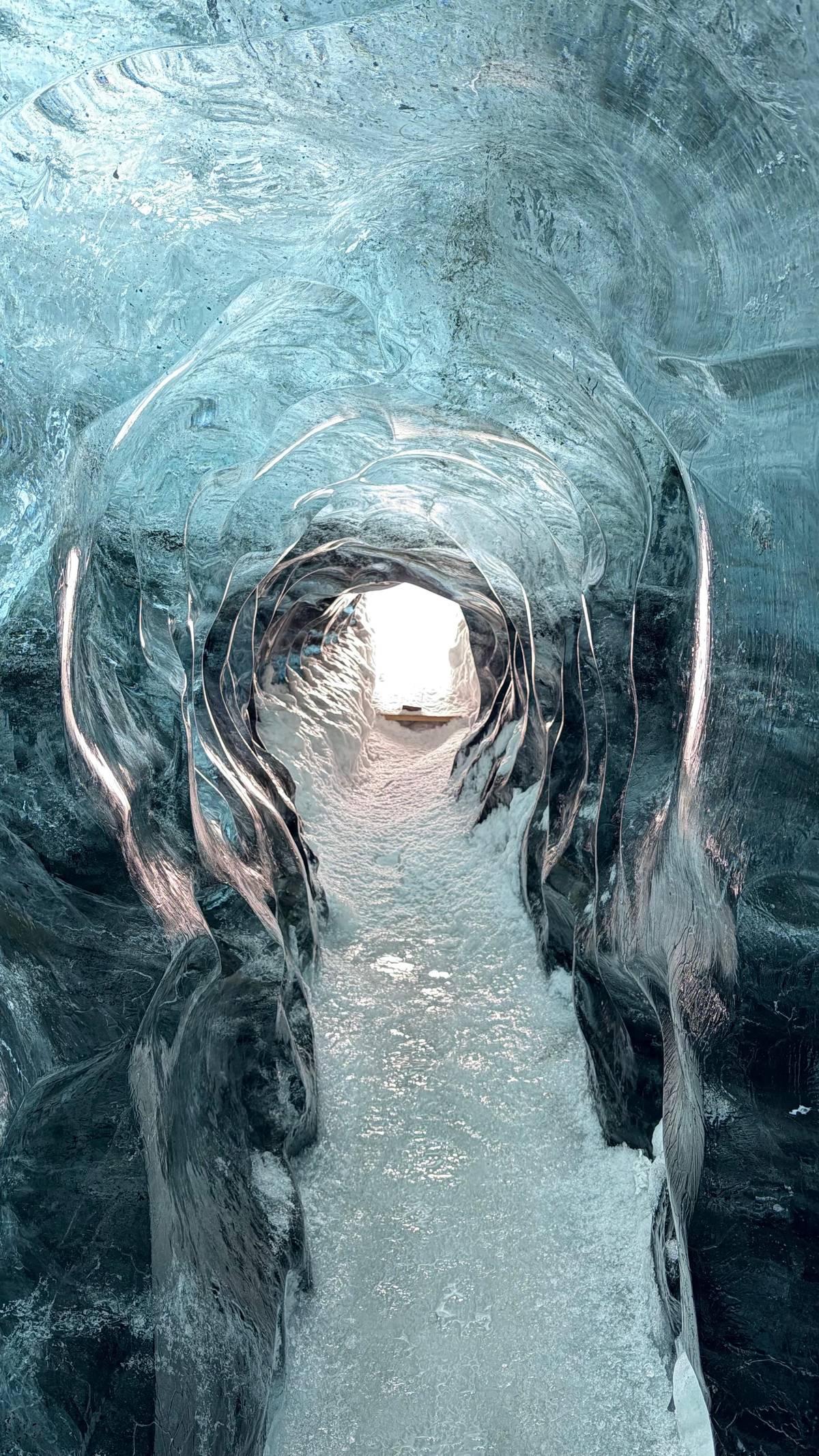
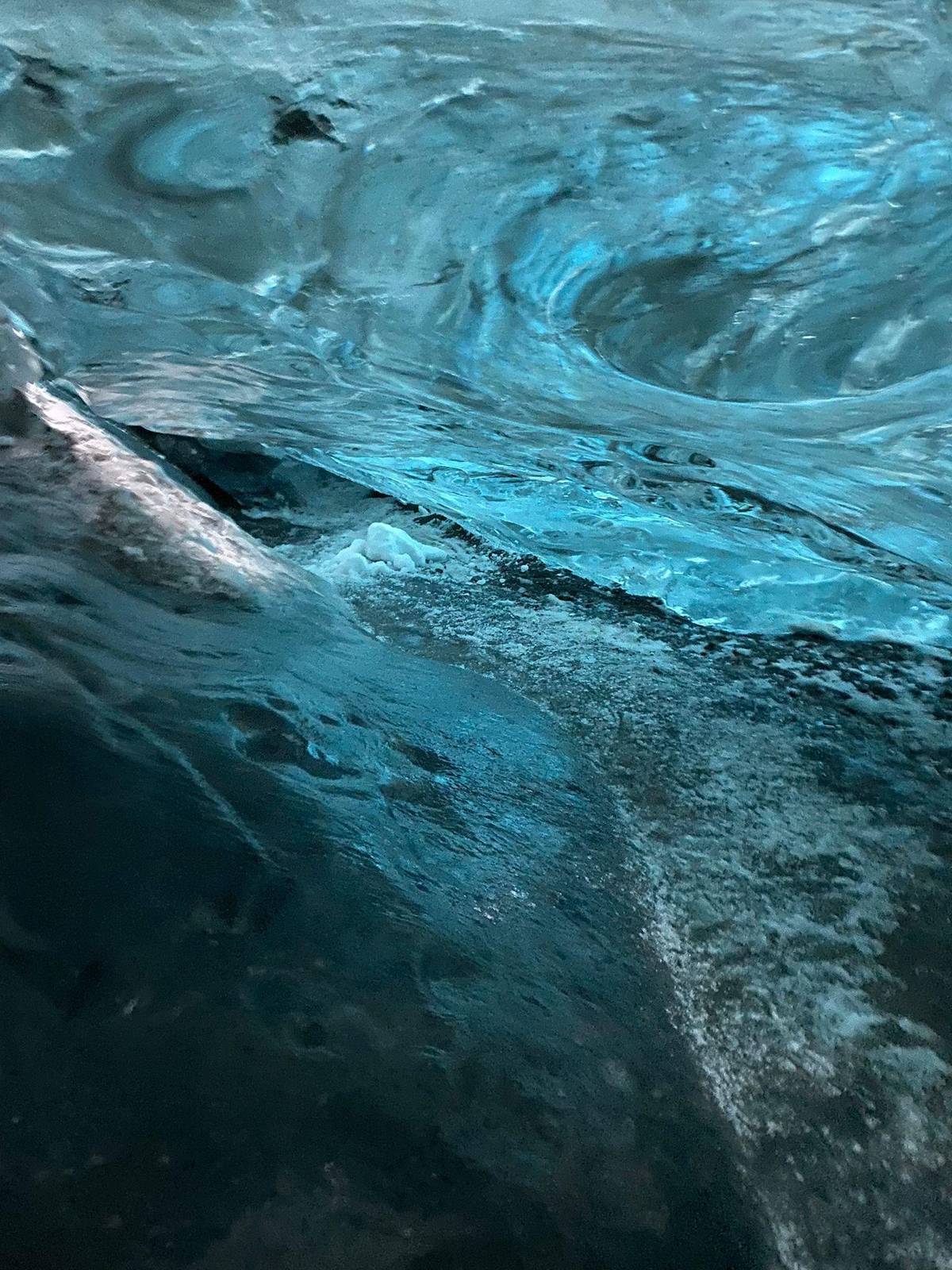
 Walk 1-4 km
Lagoon cave tour
About 3 hours
- Boots
- Above the ankle
- Provided
- Helmet & crampons
- Rent on site
- Boots & rain gear
Guides
Language
EnglishCurrency
US dollar · $On GetYourGuide you see prices in this currency.
Guide · Clothing and kit
What to wear in an ice cave is mostly about the walk to it: stiff boots for crampons, warm layers and a waterproof shell. Here is the full list, what the tours hand out, and the rules for children.
Editorial team, blue-ice-cave-iceland.comUpdated October 25, 20266 minutes to read18 sources
Pack this
When people ask what to wear in an ice cave, they usually picture the cave itself. In practice the clothing has to work for the whole trip: a super jeep ride, a walk across gravel and ice, time standing still in a cold, damp cave, and the walk back. On the lagoon tour this site sells, walking totals 1-4 km, including 1.5 km each way between the parking and the cave entrance.
The listing asks for warm, preferably waterproof clothing and sturdy walking or hiking boots, and tells you to bring warm clothing, hiking shoes, weather-appropriate clothing, a camera and travel insurance. Clothing and shoes are not included in the tour, so what you wear is your responsibility.
Safetravel puts the stakes plainly: the biggest concern outdoors in Iceland is the weather, and cold, strong wind and rain together can be fatal without proper clothing and equipment.3 A glacier in winter is exactly that combination, so treat the clothing list as safety gear rather than fashion advice.
Getting ready
Night before
Wool or synthetic base, warm mid-layer, waterproof shell, no cotton.2
Breakfast
Conditions can change suddenly in the park at any time of year.4
At the lagoon
Boots, rain jackets and rain pants can be rented at the meeting point.
Before the cave
The guide gives a safety briefing and the gear.5
Inside
Expect cold air and dripping water.6
Footwear is the item that most often goes wrong. Ice Explorers says boots must reach above the ankles to fit the crampons properly and preferably be quite stiff, and that sneakers and soft low shoes are not allowed.1 The listing sold here also bans high-heeled and open-toed shoes.
Other operators are just as strict. Arctic Adventures makes sturdy hiking boots with ankle support mandatory on its Skaftafell hike, and its crampons only fit shoe sizes 35-50 EU. Ice Walkers warns that the wrong footwear may mean being refused on its long lagoon hike. If you have very small or very large feet, check the size range before booking.
If your own boots are not up to it, you can rent. The tour sold here lets you hire rain trousers, rain jackets and hiking boots where the tour meets, and warns that guests who are not dressed for the glacier may have to rent gear or, in extreme cases, be refused for safety, with the cancellation policy applying. Renting at the start is far better than losing the tour.
Layer by layer
| Item | What works | Why |
|---|---|---|
| Base layer | Wool or synthetic | Safetravel: no cotton |
| Mid layer | Fleece or light insulation | Warmth while standing still |
| Shell | Waterproof jacket & trousers | Wind, rain and dripping ice |
| Boots | Stiff, above the ankle | Crampons must fit |
| Head | Thin hat under the helmet | Helmets are provided |
| Hands | Warm gloves & a spare pair | Cold, wet ice and rock |
Based on Safetravel, Ice Explorers and the listing sold here; rentals of boots and rain gear are available at its meeting point.21
Tours and their kits
Walk 1-4 kmAbout 3 hours
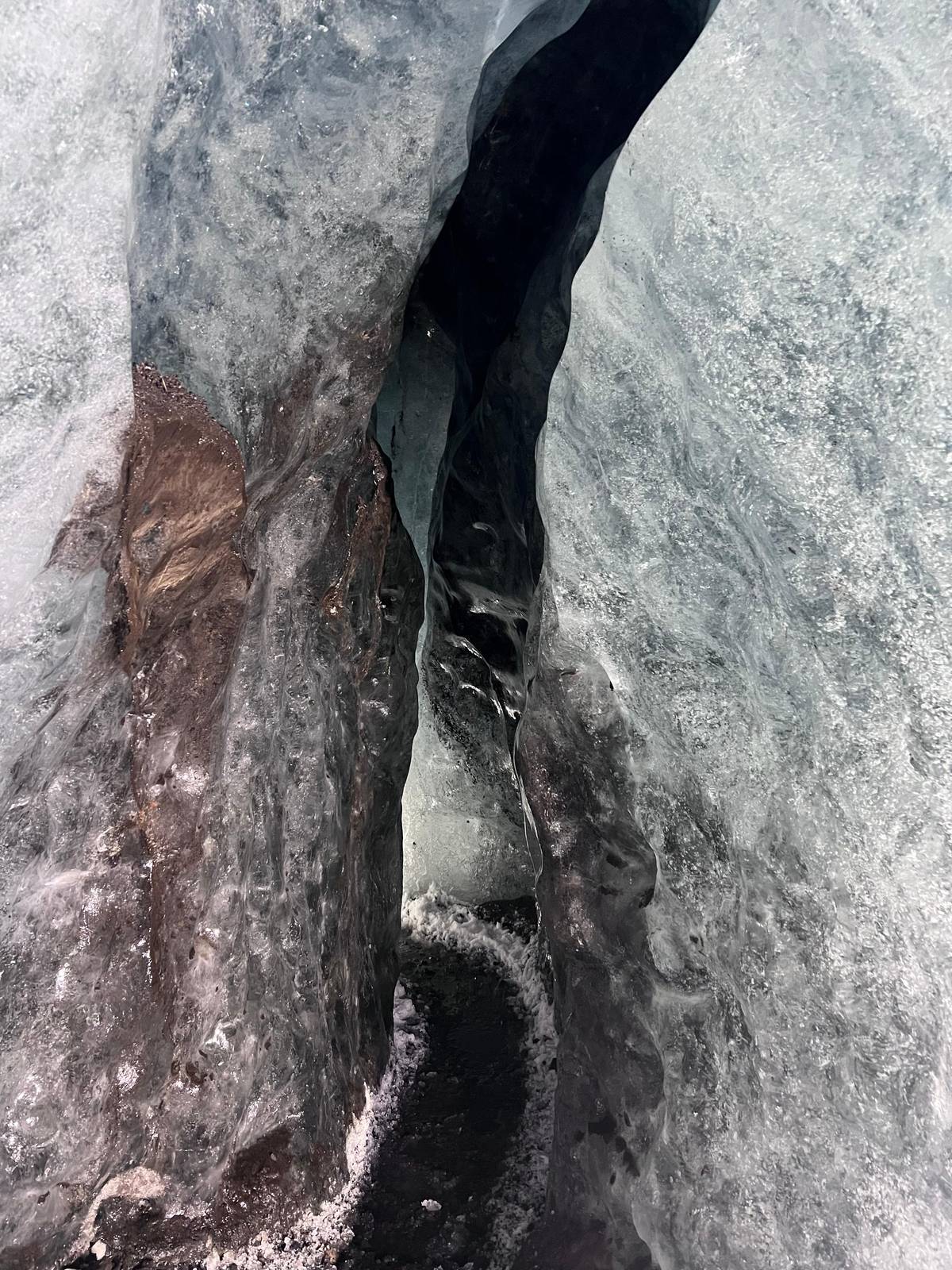 More time on ice
Skaftafell, 4 hours
 Coldest ride
Langjökull
Decision helper
Common kit problems and their fixes
The tour sold here rents hiking boots at the meeting point.
Rain jackets and rain pants are also for rent there.
One Skaftafell operator's crampons fit sizes 35-50 EU only.
Oversize luggage is not allowed on the tour sold here.
The biggest concern when outdoors in Iceland is the weather. The combination of cold temperature, strong wind and rain can be fatal if you don’t have the proper clothing and equipment.
Think in layers you can open and close. Safetravel's rule for being outdoors in Iceland is short: wool and synthetics are best, no cotton.2
Start with a wool or synthetic base layer, add a warm mid-layer such as fleece or a light insulated jacket, and finish with a waterproof, windproof shell for both jacket and trousers. The station near the lagoon averages a January high of 3.9 °C and a low of -1.9 °C, with 171 mm of precipitation in the month, so expect cold and wet rather than deep frost.13
Inside the cave it is cold and it drips. The US National Park Service describes glacier ice caves as cold, with icy water dripping from their roofs, and the Langjökull tunnel operator gives about 0°C inside whatever the season.614 A waterproof hood or a hat under the helmet keeps those drips off your neck.
Checklist
Video
No video data loads before you press play.
You do not need any technical gear of your own. The lagoon tour this site sells includes transportation in a 4WD, a guide, helmets, crampons or micro-spikes and a safety harness if needed, and gives a safety briefing before the cave.5 The US National Park Service also advises helmets for anyone exploring ice caves, as in other caves.6
On longer tours the kit grows. The Skaftafell hike fits crampons, harness, helmet and ice axe at its base, and one lagoon tour adds a headlamp to the helmet and crampons. Katlatrack includes crampons, a helmet and a headlamp on its Katla tour.15
What they do not provide is warmth and dryness. Gloves, a hat, a buff or scarf and a spare warm layer stay in your bag. Bring a small backpack so your hands are free on the ice, and keep your phone or camera in an inside pocket where the battery stays warm.
Planning an ice cave tour in Iceland with kids starts with the age and height rules, which differ a lot between tours. The lagoon tour this site sells is not suitable for children under 7 or anyone under 135 cm. Ice Explorers sets 10 for its summer glacier walk and 13 for its winter cave and exploration tour.9
Other options suit younger children. Katlatrack and Extreme Iceland give 6 as the minimum age for their standard Katla tours, and Katlatrack's private Katla tour has no minimum age at all.71211 The Langjökull tunnel's Classic tour has no age restrictions, and its Reykjavík day tour accepts infants if parents can carry them for up to 1 hour.10
Dress children with the same care as adults; a cold child ends a tour early. Give them their own waterproof trousers, warm gloves with a spare pair, and boots that really fit, and agree with them beforehand that the guide's instructions come first.
Most of your time on an ice cave tour is spent walking, so your clothing has to let you move. Ice Explorers says its cave may sit right at the edge of the glacier or need a short walk of 500-1000m on the ice, and the total walking on its tour varies between 1-4 km.16 That is enough to warm you up on the way out and cool you down while you wait at the cave.
Crampons change how you walk. Guides fit them before the ice and show you how to use them during the safety briefing; Vatnajökull National Park also recommends crampons for winter walking in the park in general.517 Trousers that are too wide at the ankle can catch on the spikes, so tuck them in or choose a slimmer cut over your boots.
Stay in the guide's line on the glacier. Safetravel reminds visitors that crevasses can appear with limited warning signs.18 Follow the guide's steps exactly, even where the ice looks smooth. Keep your hands free by carrying everything in a small backpack, and save the photos for the stops the guide makes.
The best ice cave days are often decided by small items. Sunglasses help on a bright glacier, even in winter, and a headlamp is useful for the walk back if your tour ends near dusk; at the lagoon's latitude the sun is up only about 4.3 hours at mid-December.13 A thermos of something hot waits well in the car.
Leave big bags behind. The tour sold here does not allow oversize luggage, so plan to store suitcases in your car or accommodation. Travel insurance appears on its bring list for a reason you hopefully never need.
Finally, check the forecast on the morning of the tour and dress for the worst hour of the day. Weather can change suddenly in Vatnajökull National Park, the park warns, and that holds in every month of the year.4 Being slightly too warm on the walk out is a small price for being comfortable in the cave.
This winter's cave
Pick a date between October and April and see the ice as it is this season.
No. Ice Explorers does not allow sneakers or soft low shoes; boots must reach above the ankles.1
Yes, at the meeting point. The tour sold here rents rain pants, rain jackets and hiking boots before departure.
Yes. Helmets and crampons or micro-spikes are included, and a safety harness if needed.
Yes. Safetravel advises wool and synthetics outdoors in Iceland, no cotton.2
Around freezing. The Langjökull tunnel operator gives about 0°C inside, whatever the season.14
7 years and 135 cm. The tour sold here is not suitable for children under 7 or anyone under 135 cm.
No. Oversize luggage is not allowed on the tour sold here.
Sources